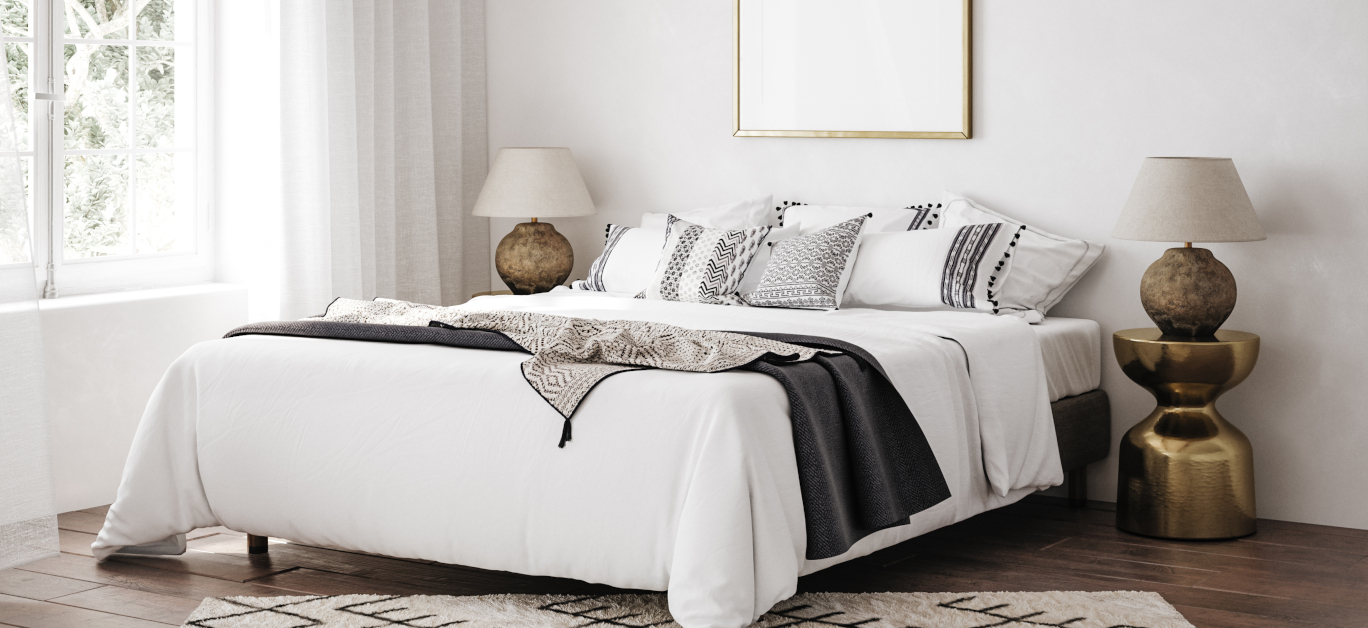
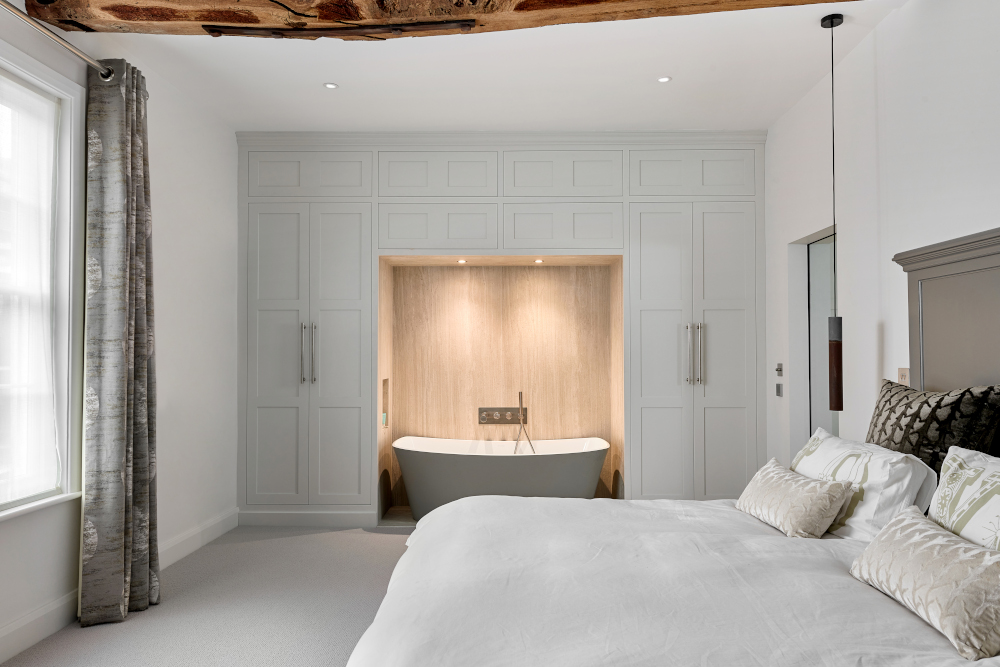
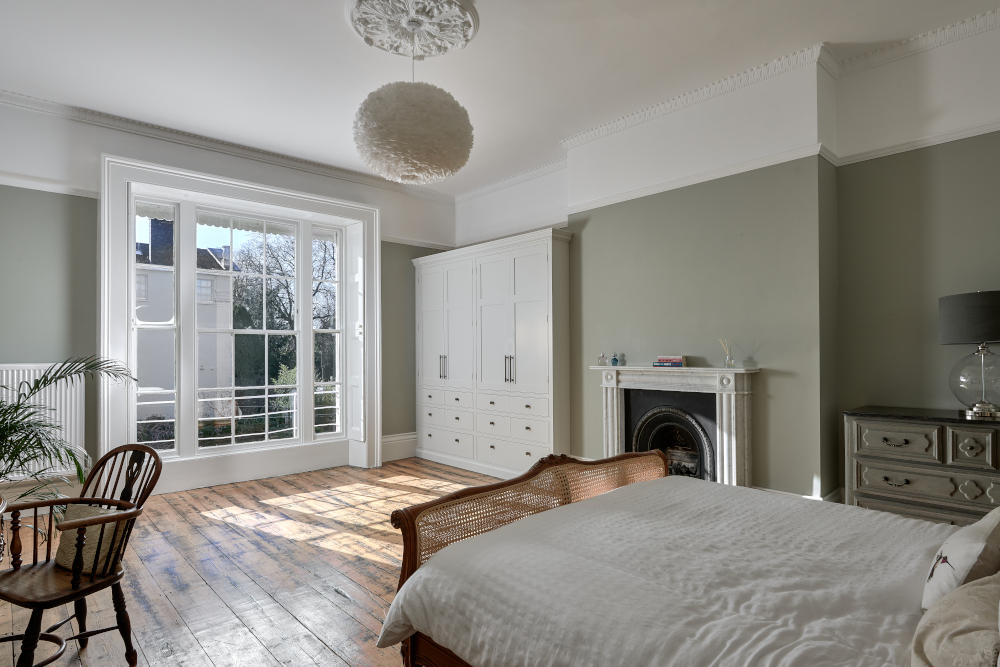
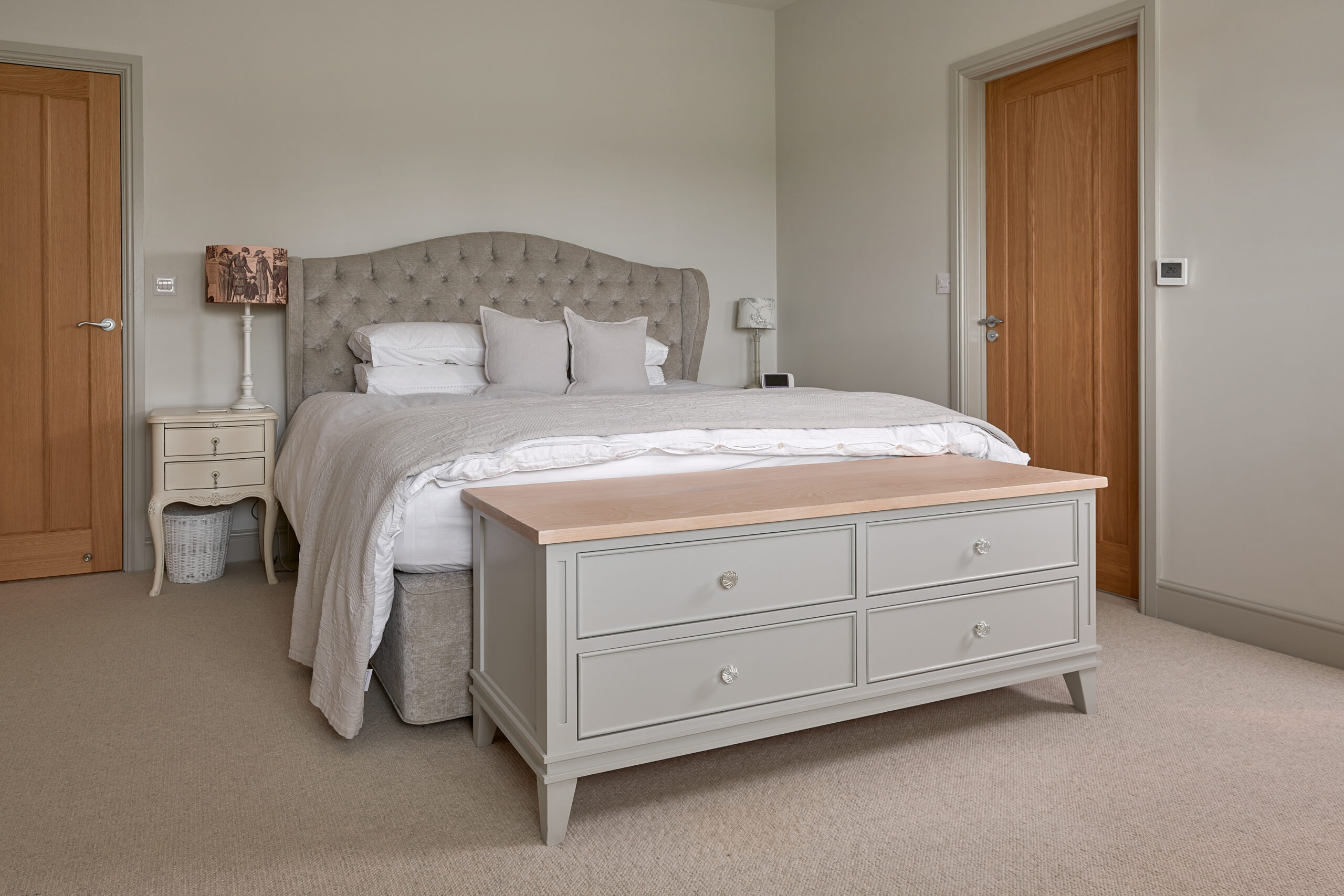
When it arrives to the art of unique parts, there are a total host of causes why a piece built especially for you aids evoke a feeling of luxurious in not only your area, but in your each day lifetime. Bespoke parts in the bedroom be certain your non-public, own place is exclusive and unique, beautifully fitting your demands.
Below, Will Lyne, guide designer and co-proprietor of Christopher Peters Kitchens and Interiors, shares just a couple of the techniques bespoke bed room furniture can bring a contact of luxury to your area.
Distinctively diverse
Bespoke household furniture is of a significantly increased top quality as specialist craftsmen shell out exceedingly near interest to each and every detail for the duration of its manufacture
The attractiveness of bespoke home furnishings is that it is built just for you. No matter whether you are looking for an productive piece to fill an empty area or a mattress which will in good shape seamlessly into your special bedroom décor, bespoke home furniture offers you the freedom to fully customise a one particular-of-a-variety piece. Bespoke home furnishings is of a considerably larger top quality as skilled craftsmen pay exceedingly shut consideration to every detail throughout its manufacture. Armed with the expertise of how to change the very best-good quality products into beautiful, particular person pieces that mirror the design and style and character of your house, it is often apparent to see the enthusiasm and care that goes into their function.
The artwork of bespoke
Picking an qualified group of artisans to fulfil your home furniture requirements will also assure a personalised company from begin to end
In spite of the classy natural beauty that arrives with a bespoke piece, luxurious does not just refer to aesthetics. Home furniture which will allow you to have an effective, seamless place adds a sense of structure and ease to your every day regime, as the design becomes just as significantly about its perform as its overall look. Opting for furnishings personalized to you will not only ensure you get a fantastically crafted piece, but obtain to a whole environment of storage alternatives, from tie racks and multi-level shoe storage to extra shelving to store critical keepsakes. Deciding upon an professional team of artisans to fulfil your household furniture wants will also ensure a personalised service from start out to complete – such as throughout the layout, installation and aftercare levels of your produced-to-order journey.
Bespoke benefits
Designers relish the probability to remodel an otherwise uncomfortable home into a exclusive set up
If you are on the lookout to accomplish that desire residence, it stands to motive that this will be far additional available if you decide for a designer or a provider that can adapt a design and style to your wants, needs and non-negotiables for the area. Transforming bedrooms into tranquil, purposeful spaces, tailored types that are absolutely exceptional necessarily mean home furnishings pieces will be built to the requirements of your room.
Designers relish the prospect to renovate an if not uncomfortable area into a one of a kind installation. Their ingenuity solves challenges shoppers believed unsolvable, which they can only deliver with a bespoke solution. Functionality, variety and model merged is the not-so-magic formula recipe to eternally staying proud of the spaces you have made in your home.
In January 2022, Berlin-based estate agent Peter Rabitz, who specialises in selling expensive homes, took on a smartly decorated three-bedroom penthouse apartment in Kreuzberg, a fashionable Berlin suburb.
Initially, the vendor insisted that it be marketed at €2.945mn. But, by November, there had been so little interest that Rabitz persuaded her to drop the price to €2.495mn. He would like to price it even lower: once he has interest from several prospective buyers, he will be able to play them off against each other to negotiate a higher price. But, in recent months, buyer interest has been hard to find.
“When I put the home on the market at the start of 2022, properties like this were selling at those prices,” he says. “But now that interest rates have gone up, there’s just no way. Buyers know they have power, but too many owners are still asking crazy prices.”
Across Germany’s large cities, higher mortgage rates have reduced what people can afford to pay for homes, but sellers remain reluctant to drop their prices. The result is a stand-off and a slump in housing market sales, as many luxury homes languish unsold on the market.
In November, the number of homes for sale for more than €500,000 on Germany’s top property portals that had been listed for more than 60 days was double the level of a year earlier, according to Homeday, a large German estate agent. Only 2,260 homes were sold in Berlin between October and December, down from 4,013 a year earlier, according to government data.
During that time, the average 10-year fixed mortgage rate increased significantly. It had been 1 per cent at the start of 2022, but stood at 3.96 per cent at the start of March, according to Interhyp, a German mortgage broker. House prices were already falling: down 2.5 per cent in the second half of 2022 — the biggest six-month drop in more than 20 years, according to the Association of German Pfandbrief Banks (VDP). Between the first quarter of 2010 and the second quarter of 2022 home prices had increased by 107 per cent.
And recent numbers underestimate the size of price falls, according to Thomas Zabel, co-founder of the German residential business of Savills, the property agency. “For homes that are actually selling, you’re talking about 20 per cent to 25 per cent off the initial listed price,” he says. “It’s the same story in every big city — even in the best, most expensive locations in Munich, our most prestigious luxury market.”
In Munich’s central Ludwigsvorstadt-Isarvorstadt district — an area perched below the city’s historic Old Town, taking in the desirable quarters of Glockenbachviertel and Schlachthofviertel, that are well stocked with large villas — average listing prices fell 11.5 per cent in the last three months of the year, compared with three months earlier, according to Homeday.
Further from the city centre, Germany’s richest buyers have long been drawn to Bogenhausen, Munich’s quiet north-easterly borough — where high stone walls conceal sprawling private gardens belonging to large detached homes, costing €5mn and more.
In Hamburg’s upscale Rotherbaum district, where Tudor-style detached homes look out on to Außenalster, the larger of the city’s two artificial lakes, listing prices fell 9.9 per cent in the last three months of the year, compared with the three months earlier, according to Homeday.
The city’s luxury home market is small, with few homes selling, even in good years. A long history of dynastic family businesses, with fortunes built over generations by merchants connected with the port, means price falls here have been lower than in other cities, according to Zabel. “Hamburg is dominated by old money and this makes it more resilient: the most expensive homes have been in family ownership for many generations,” he points out.
But, in Berlin, some prices have been cut drastically. Many of the city’s luxury homes — which had an average listing price of €3.45mn in the last three months of 2022, according to real estate group Engel & Völkers — are located in Mitte, the city’s historical centre, or jostle for space between the stylish restaurants and celebrated museums of Charlottenburg. Sales of these have slowed to a trickle, though and the few that are selling are going for discounts of up to 30 per cent on the initial listing price, according to Rabitz.
For homes that are actually selling, you’re talking about 20{61deb032f2f3cf43cd91e0a97f017aab274ddbb67b74a5b085bd003b9ac3cd96} to 25{61deb032f2f3cf43cd91e0a97f017aab274ddbb67b74a5b085bd003b9ac3cd96} off the initial listed price
Germany’s luxury estate agents and mortgage brokers describe a market that has seized, with buyers pulling out as higher mortgage rates make purchases unaffordable, or delaying transactions, believing prices have further to fall.
“Mortgage rates are going up but banks are also requiring larger deposits,” explains Ozan Yaprak, chief executive of local mortgage broker Moya Baufinanz Berlin, which — he says — arranges 100 mortgages per year between €1mn and €3.5mn. “For many customers considering a high-end apartment purchase, the requirement for a larger deposit now is enough for them to change their mind.”
In recent years, much of Berlin’s luxury market had been driven by those minted from the city’s thriving start-up scene or working in finance, media or law. Today, these affluent working professionals are pulling back from purchases, meaning Yaprak relies much more on family offices and very rich families for business. “Last year, business was very difficult: those who work in start-ups, finance or real estate are much less confident about buying homes.”
Foreign buyers in Germany remain rare, since international investors favour other cities, such as London, Paris and Lisbon, for their European home purchases.
Meanwhile, predictions that workers would relocate en masse from London to Frankfurt as financial groups shifted operations following the UK’s exit from the European Union, have not come true. “Brexit just wasn’t a factor,” says Till-Fabian Zalewski, CEO of Germany, Austria and Switzerland for Engel & Völkers. “And those in the sector moving back and forth [between London and Frankfurt] tend to rent rather than buy.”
Buyers who remain committed to a purchase have become more discerning, keen to drive a hard bargain with sellers, avoiding all but the best homes, and expecting significant price discounts.
“They know that they are in a strong position, so they are holding back and watching for a few months,” says Rabitz. “Those buying with cash, in particular, know they can get a good price.”
In the luxury apartment market, unless homes are the best of the best, they will be ignored, according to Zabel.
“Even if the building is super prime and the area is outstanding, it needs something special . . . the penthouse, an elevator into the apartment, or access to a rooftop, for example — a normal unit just won’t sell,” he says.
Agents are working hard to persuade sellers to drop their prices. But those in no rush to sell have been resisting, or taking their homes off the market entirely, waiting for prices to recover.
“There are so few homes available: I’m reaching out all the time to past clients, asking them if they would even entertain the idea of selling,” says Rabitz.
Roughly a third of his sales are off market, he says, with sellers favouring the privacy it affords, or keen to avoid leaving a digital record of a long, unsuccessful sale attempt.
Other sellers have taken homes off the market, preferring to keep their money in bricks and mortar at a time when global economic prospects look poor.
A year ago, Georg Bruederl, 49, who owns an electrical engineering business, had found a reliable looking buyer for his three-bedroom family house in Munich, and agreed an acceptable price of about €5mn.
But, following Russia’s invasion of Ukraine, he pulled out of the sale and took his property off the market. “I was nervous about the state of the global economy and, with inflation rising, I did not want to have such a large amount of money in cash,” he says (in the autumn, he returned the home to the market and is currently in the process of selling it).
There are so few homes available: I’m reaching out all the time to past clients, asking them if they would even entertain the idea of selling
For luxury home buyers, large mortgages have become more difficult to secure — as well as being more expensive. Yaprak says that banks have reduced maximum loan-to-value ratios and the number of large mortgages they are prepared to grant, and are taking longer to approve most mortgages. Their lending policies have become more conservative as fears over the war in Ukraine, inflation and borrower default have intensified.
“For all mortgages, banks are asking more questions,” he says. “Those above €2mn are particularly difficult. Most customers want LTVs between 80 per cent and 90 per cent. But, in 2021, I got a customer a 100 per cent loan to buy a €2.4mn home in the middle of Berlin without difficulty. The same application would be rejected now. You need a minimum of 10 per cent deposit.”
A year ago, for a €1.5mn mortgage at 80 per cent LTV, banks offered fast-lane approvals as quickly as one week; now it takes between four and five weeks, according to Yaprak.
“Banks’ due diligence takes more time, the banks are asking for more documents, every property is being checked with more detail,” says Peter Guthmann, of Guthmann Estate, a local agent which produces regular data on Berlin’s housing market. “Surveyors [employed by the bank] are extremely conservative in their valuations,” he adds.
Delays in securing mortgages has created an unease amongst buyers, leading to cash buyers swooping in and securing favourable deals.. “At least five times recently I’ve seen that happen,” says Yaprak.
With mortgage rates set to stay high for some time yet, prospects for a recovery in Germany’s luxury housing market seem remote.
Dmitri Uvarovski, head of research at Homeday says that prices must fall another 10 to 15 per cent for German home buyers to afford what they could have done a year ago, when mortgage rates were lower.
“Interest rates will not decrease any time soon, so the market really needs lower prices to recalibrate,” argues Zabel, adding that he does not expect the shift to happen for many months.
That suggests no early end to the stand off between sellers and buyers of Germany’s top homes — whether in Munich’s Bogenhausen and Grünwald, along the tranquil banks of Hamburg’s upscale Rotherbaum, or on the roomy boulevards of Berlin’s Mitte.
This article is part of FT Wealth, a section providing in-depth coverage of philanthropy, entrepreneurs, family offices, as well as alternative and impact investment